
Browsing a Library That Organizes Itself
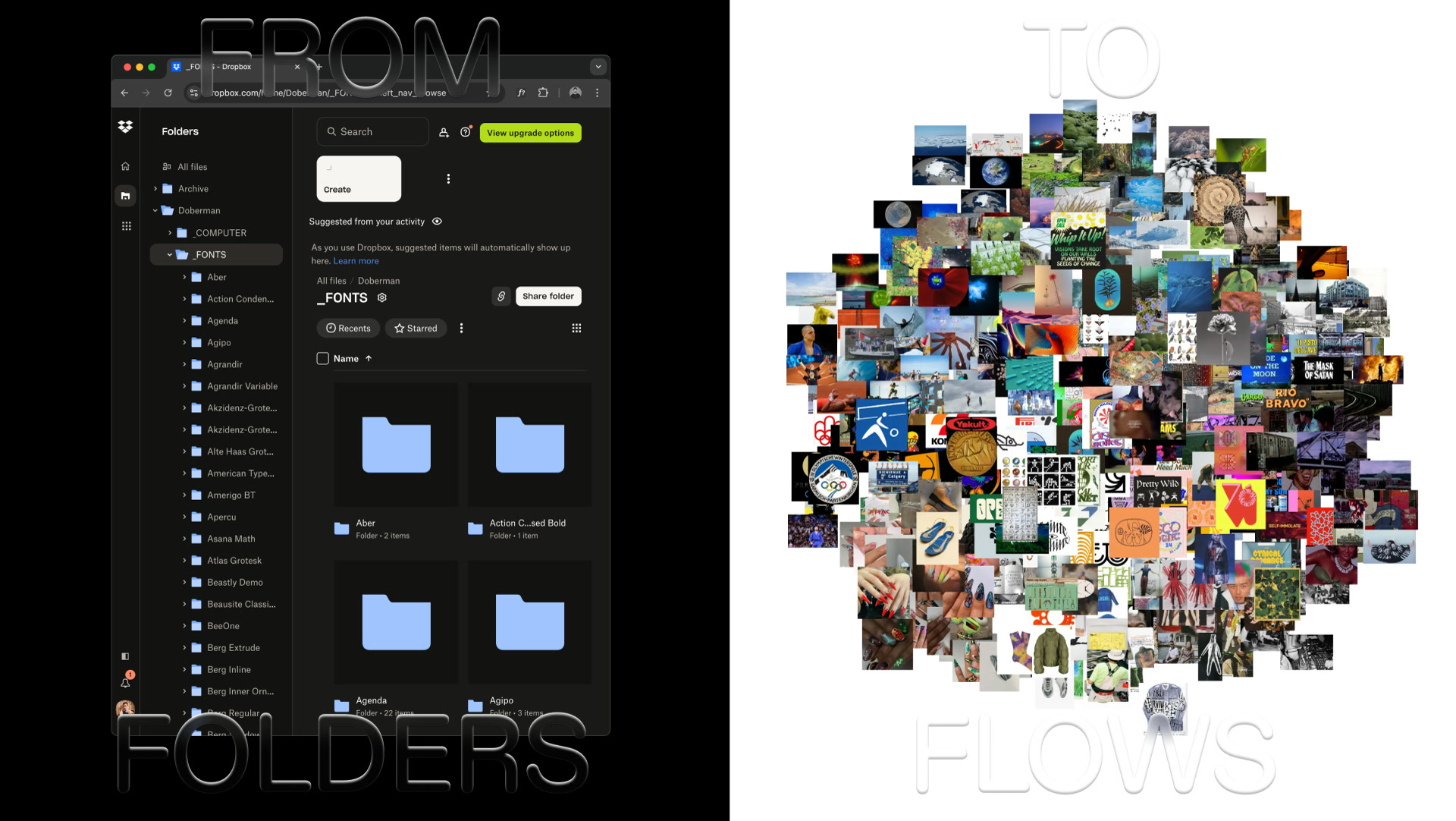
Self-organizing assets: Liquid Metal + the Z-index.
- No.
- 005
- Client
- SOOT
- Sector
- Creative tools
- Medium
- Product
- Timeline
- 2024–25
- Role
- Lead Product Designer
- Website
- soot.com
Brief
Creative work piles up faster than a filesystem can organize it. The usual tools sort by folder and metadata, which tell you where a file sits and when it arrived, not what's in it. SOOT runs multimodal vector search across images, video and references so a library can be organized by content. The controls for browsing a library like that didn't exist yet.
Approach
Months of prototypes with SOOT, UNNAMED and Two.much Studio, working on two questions: what parts does a self-sorting library need, and how do you show depth on a flat screen.
Research turned up three kinds of user. Focus was built for the original content creator, who already has the work and needs to look at one piece closely without losing the rest, find anything quickly, and send it somewhere final.
Eight parts: Spaces, Views, search, focus, metadata, upload, selection and sharing. Drop in a Drive link, a Figma file, an Are.na board or a whole YouTube channel and it maps as it loads. See Similar searches by color, composition and feel.
Underneath are Liquid Metal, a parts library loose enough to prototype a screen in an afternoon, and the Z-index, which stacks things in depth so position tells you what something is.
Outcome
Liquid Metal outlasted the brief. New screens get built from parts the team has already agreed on, so the same controls stay in the same places as the product grows.
The bigger finding came from the people who kept coming back. Most of them weren't searching a private archive. They were building collections to publish to an audience they already had, and they cared most about how those collections looked once shared. SOOT WORLD, the public directory of Spaces, grew out of that.
Contributors
- SOOT Jake Harper, Noa Chazan
- UNNAMED
- Two.much Studio